
Buying Specialty Coffee Beans Online in 2026
Table of Contents
- What Makes Coffee Beans Specialty Grade
- How to Choose Specialty Coffee Beans Online
- Best Coffee Subscription Services 2026: What to Compare
- Coffee Bean Storage Tips for Home Brewers
- Water Chemistry and Grind Size: Two Details That Decide Flavor
- The Carbon Footprint of Shipping Coffee to Your Door
- Frequently Asked Questions
Last Updated: September 20, 2026
What Makes Coffee Beans Specialty Grade
Specialty grade is not a marketing phrase; it is a measured standard. Coffee earns the label only when it scores 80 points or higher on the 100-point scale used by Specialty Coffee Association cupping protocols, where licensed graders assess fragrance, flavor, acidity, body, and aftertaste.
Specialty coffee beans are beans that score 80 or above on the SCA scale, are grown at high altitude, picked ripe, and processed with enough care to preserve flavor clarity. Commodity coffee rarely clears 70. That gap is why a specialty bean tastes like citrus and brown sugar instead of cardboard.
Reading Coffee has passionately perfected the art of small-batch roasting since 1989, cultivating direct relationships with global producers to source ethically traded, earth-friendly beans that ensure unsurpassed quality in every gourmet cup. Our over 35 years of experience and commitment to sustainable practices mean you're not just getting premium specialty coffee, but also supporting a community-focused approach to exceptional taste. Three things separate specialty from ordinary: Mastering the nuances of origin, processing method, and roast profile remains essential when choosing specialty beans for your home brewing routine.
- SCA score of 80+, verified through cupping by trained graders
- Traceability to a farm, cooperative, or micro-lot, not a country blend
- Altitude and varietal, since dense, slow-ripened coffee cherries hold more sugar
A common mistake is assuming "gourmet" on a bag means anything. Only the score, roast date, and origin details tell you what you are buying.
How to Choose Specialty Coffee Beans Online
Choosing specialty coffee beans online comes down to four questions: when was it roasted, where was it grown, how was it processed, and does the roast suit your brewer.
Reading the Label: Roast Date, Origin, and Processing Method
Roast date matters more than any other line on the bag. Coffee peaks roughly 4 to 14 days after roasting, once degassing settles, then fades. A "best by" date tells you nothing about freshness.
Origin narrows flavor. The processing method, washed, natural, or honey, decides how much fruit lands in the cup.
Single-Origin vs. Blends: Which Fits Your Brew Method
Single-origin coffees highlight one farm or region and reward careful brewing. Blends trade flavor clarity for consistency, which is why they hold up in espresso and drip.
Match the bean to the brewer:
| Coffee | Roast | Flavor Notes | Best Brew Method |
|---|---|---|---|
| Colombian Supremo ($18) | Medium | Lemon, brown sugar, milk chocolate | Drip, pour-over |
| Ethiopian Yirgacheffe ($20) | Medium | Floral, citrus, wine | Pour-over, AeroPress |
| Sumatra Mandheling ($20) | Medium | Earthy, herbaceous, low acidity | French press, cold brew |
| House Blend ($19) | Medium | Balanced, bright acidity, full body | Any method |
Best Coffee Subscription Services 2026: What to Compare
The best coffee subscription services in 2026 compete on roast-to-order timing, flexibility, sourcing transparency, and price per bag. A subscription only beats one-time buying if beans ship within days of roasting, otherwise you pay a premium for coffee already past its peak.

Compare before you commit:
| What to Check | Why It Matters | Red Flag |
|---|---|---|
| Roast-to-order window | Freshness and degassing | Beans roasted weeks ago |
| Pause and skip options | Matches your drinking pace | No pause, cancel by phone only |
| Cancellation method | Trust and control | Email-only or "call us" exits |
| Cadence options | Waste prevention | Fixed weekly only |
| Origin detail | Traceability and ethical sourcing | "Gourmet blend," no farm |
| Price per 12 oz | Real cost per cup | Hidden shipping fees |
Cancellation, Pausing, and Flexibility
The mechanics matter more than the marketing. A well-built subscription lets you:
- Pause indefinitely without losing your grandfathered price
- Skip one shipment when you travel or fall behind
- Change cadence between weekly, biweekly, and monthly
- Swap roasts before the next billing cycle closes
- Cancel in the dashboard, with a confirmation email, not a retention call
Subscription vs. One-Time Buying: The Real Math
One-time buying wins when:
- You drink fewer than two cups a day
- You want to rotate origins frequently
- You prefer to stock up during sales
- You are still dialing in your taste preferences
Reading Coffee's single-origins and reserve lots ship as one-time purchases, so you can build a rotation at your own pace. The Jamaican Blue Mountain 100% ($60) and Hawaiian Kona Prime ($65) arrive as 12-ounce reserve lots, certified genuine by their origin authorities, for buyers who want a rare exotic without a recurring commitment.
Coffee Bean Storage Tips for Home Brewers
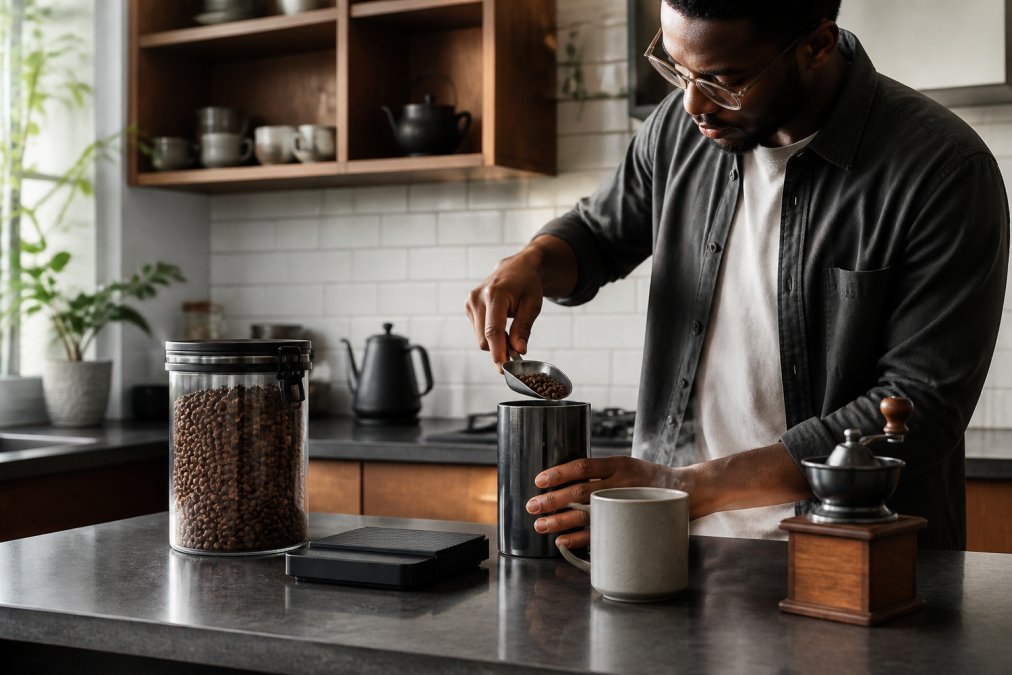
Storage decides whether your beans taste like the cupping table or the pantry. The enemies are oxygen, moisture, heat, and light, in that order. "Use an airtight container" is correct but incomplete, the hardware you choose determines how much of the roast's peak window you capture.
Storage Hardware: What Each Option Actually Does
Storage containers are not interchangeable. Each design solves a different problem, and the trade-offs matter more than the marketing.
| Container Type | Mechanism | Best For | Trade-Off |
|---|---|---|---|
| One-way valve bag | Releases CO2, blocks oxygen ingress | Short-term, 1-2 weeks | Not resealable once opened |
| Vacuum canister | Pulls air out with a twist or pump | 2-4 weeks, multi-bag buyers | Requires re-vacuuming after each open |
| One-way valve canister | Passive CO2 release, sealed lid | Daily use, single bag | Slower to purge oxygen than vacuum |
| Single-dose tubes | Pre-weighed, sealed portions | Espresso, precise dosing | Prep time and extra packaging |
| Freezer (whole bag, sealed) | Slows oxidation at low temp | Long-term storage, 1+ month | Condensation risk if opened cold |
The Freezer Question, Answered Properly
Skip the freezer for daily-use beans. Condensation forms each time you open the container, and moisture ruins a roast faster than oxygen alone.
- Freeze whole bean only, in a vacuum-sealed or one-way valve bag
- Freeze in single-use portions, so you never thaw and refreeze
- Thaw sealed, at room temperature, before opening, to avoid condensation on the beans
How Long Beans Actually Last
Whole bean specialty coffee peaks about 4 to 14 days after the roast date and stays good for roughly four to six weeks in an airtight container. Ground coffee stales within days. Vacuum storage stretches the tail end of that window but cannot resurrect a roast that was already two months old when it shipped.
Water Chemistry and Grind Size: Two Details That Decide Flavor
Water and grind size decide extraction, yet most guides treat both as afterthoughts. Your coffee is roughly 98% water, so its minerals shape the cup as much as the bean does.
- Too coarse: sour, weak, under-extracted
- Too fine: bitter, harsh, over-extracted
- Dialed in: sweet, balanced, clear aftertaste
The Carbon Footprint of Shipping Coffee to Your Door
Shipping coffee has a footprint, and pretending otherwise helps no one. The good news: the last mile is usually the smallest slice. Growing, processing, and roasting carry more of the total than the delivery van.
What actually lowers your footprint:
- Buy whole bean in larger, less frequent orders to cut packaging and trips
- Choose roasters with direct trade relationships that shorten the supply chain
- Skip single-use pods, which add packaging weight per cup
- Consolidate shipments rather than ordering one bag at a time
Frequently Asked Questions
What should I look for when buying specialty coffee beans online?
Check three things: the roast date (not just a best-by date), the origin and processing method, and whether the roaster ships roast-to-order. Specialty coffee beans should carry a roast date within the past two to three weeks for peak flavor. Look for transparent sourcing details, whole bean options, and tasting notes that match your preferred flavor profile, whether that's bright and fruity or rich and chocolatey.
Is it worth buying coffee beans online versus at a grocery store?
Online roasters typically ship within days of roasting, while grocery store bags may sit on shelves for months. Freshness matters because coffee starts losing aroma and flavor within weeks of roasting due to oxidation and degassing. Buying specialty coffee beans online also gives you access to single-origin micro-lots, rare exotics, and reserve coffees that rarely appear in retail stores. The trade-off is shipping time, so plan ahead if you brew daily.
How do I know if coffee beans are fresh when ordering online?
The roast date on the bag is your best indicator. Reputable roasters print it clearly, and roast-to-order operations ship within 24 to 48 hours of roasting. Avoid bags with only a best-by date, which says little about actual freshness. Once your beans arrive, let them rest a day or two if they were roasted very recently; this allows degassing, which improves extraction and reduces bitterness in pour-over and espresso.
What are the benefits of a specialty coffee subscription?
A consistent supply of fresh beans on a schedule you choose means you rarely run out or brew stale coffee. Many roasters rotate single-origin offerings, letting you explore different origins, processing methods, and roast profiles without committing to a full bag of something you might not enjoy.
How should I store specialty coffee beans after they arrive?
Keep whole beans in an airtight, opaque container away from light, heat, and moisture. A vacuum canister that removes oxygen can extend shelf life significantly compared to a standard bag clip. Store beans at room temperature, not in the refrigerator, where condensation and odors can seep in. Grind just before brewing for the best flavor clarity, and buy in quantities you'll finish within two to four weeks.