
How to Brew Rare Exotic Beans Without Wasting a Cup
Last Updated: October 28, 2026
Quick Summary
Brew rare exotic beans by starting from a fixed 1:16 coffee-to-water ratio at 200°F with a medium-fine grind, then adjust one variable at a time based on the bean's processing method and variety. This baseline protects delicate light roasts from over-extraction while you dial in the cup.
- Use 15.6 grams of coffee for a single 250-gram cup at the 1:16 baseline.
- Move toward 1:15 for dense light roasts and 1:17 for natural or honey processed beans.
- Lower the dose and temperature the more fermentation the bean underwent.
- Change only one variable per cup and log each brew to repeat results.
- Stop dialing when the cup is balanced and you can name two or three flavors.
Table of Contents
- Start With a Baseline Recipe for Rare Exotic Beans
- Finding the Best Coffee-to-Water Ratio for Unusual Beans
- Matching Coffee Grind Size for Pour Over and Other Methods
- An AeroPress Recipe for Light Roast Coffee With Big Flavor
- Bean-Specific Guidance by Processing Method and Variety
- How to Store Specialty Coffee Beans Without Losing the Good Stuff
- Dialing In When the Cup Tastes Off
- Ordering Rare Beans From Reading Coffee
- Frequently Asked Questions
Start With a Baseline Recipe for Rare Exotic Beans
Rare exotic beans are single-origin coffees grown in small lots, often from unusual varieties or experimental processing, that carry flavors you will not find in a standard supermarket bag. At Reading Coffee, we have roasted small batches since 1989.
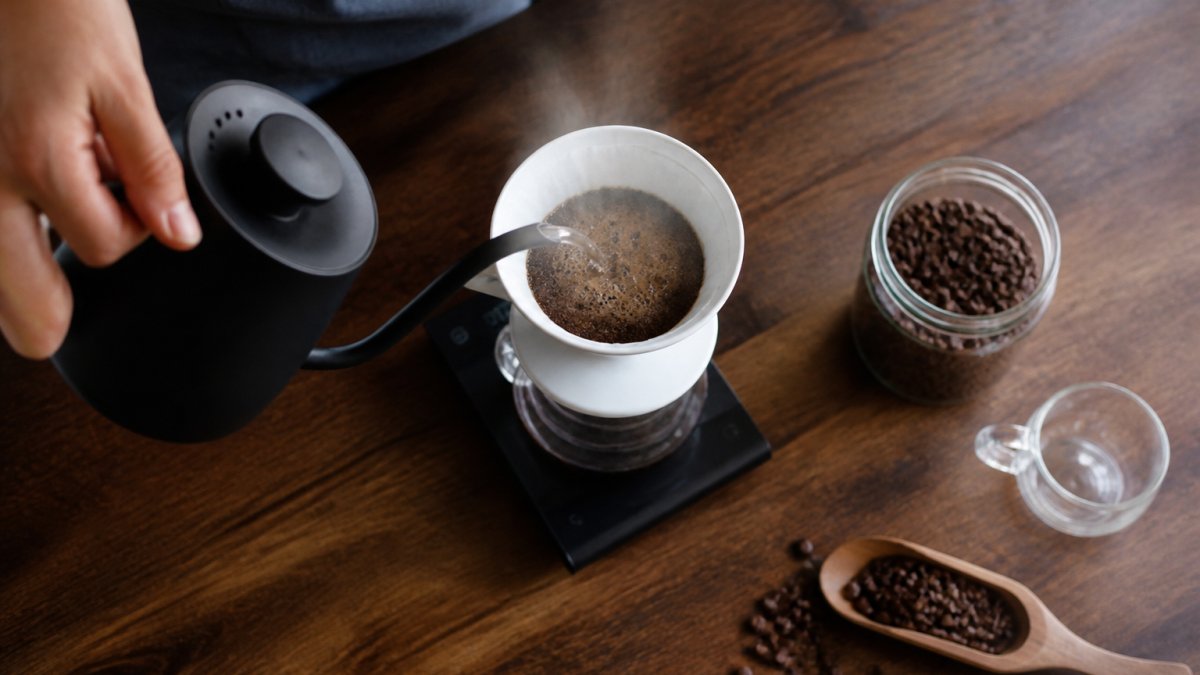
The 1:16 Starting Point and Why It Works
A 1:16 coffee-to-water ratio means one gram of coffee for every 16 grams of water, about 15.6 grams for a single 250-gram cup. This middle-of-the-range ratio gives you room to move in either direction without ruining the cup, protecting an expensive delicate light roast from over-extraction.
A Step-by-Step Pour-Over Walkthrough
- Heat water to 200°F and rinse the filter.
- Weigh 15.6 g of coffee, ground medium-fine.
- Start a timer and pour 50 g of water to bloom the bed.
- Wait 45 seconds, then pour in slow circles to 150 g.
- At 1:15, pour to 250 g and let it drain.
- The bed should finish draining near 3:30.
The Stagg XF pour-over set includes a dripper, carafe, and filters. The Stagg pour-over kettle has a precision pour spout.


Finding the Best Coffee-to-Water Ratio for Unusual Beans
The best coffee-to-water ratio for unusual beans is 1:16 as a starting point, moved toward 1:15 for dense light roasts and 1:17 for softer or naturally processed beans. Ratio is your volume knob for strength; grind is your knob for extraction.
- 1:15 for dense, high-grown light roasts that taste thin.
- 1:16 as the default for any bean you have not brewed before.
- 1:17 for natural or honey processed beans that taste syrupy or heavy.
A common mistake is changing ratio and grind at the same time. You will never learn which change fixed the cup.
Matching Coffee Grind Size for Pour Over and Other Methods
Coffee grind size for pour over should look like medium-fine sand, close to table salt. For AeroPress, go finer, like fine sand. For French press, go coarse, like sea salt.
Grind consistency matters more with rare beans than with everyday coffee. Fines, the tiny dust particles from a grinder, clog the filter and stall the drawdown; a flat-bottom dripper handles them better than a cone.
An AeroPress Recipe for Light Roast Coffee With Big Flavor
- Use 16 g of coffee, ground fine.
- Heat water to 205°F.
- Add 60 g of water and stir five times.
- Wait 30 seconds, then add water to 220 g.
- Cap it, wait to 1:45, then press slowly for 30 seconds.
Bean-Specific Guidance by Processing Method and Variety
Bean-specific guidance by processing method and variety is where rare beans reward attention. Most brewing guides treat origin and tasting notes as the main guide, but for unusual lots the processing method and variety tell you more about how the bean will behave in the brewer. Below is a concrete adjustment matrix for the baseline recipe, plus the mechanism behind each change.
Processing Method Adjustment Matrix
Start from the 1:16 baseline, 200°F, medium-fine grind, and four-minute pour-over. Then apply one row of this table based on the label on the bag.
| Processing method | Ratio | Water temp | Grind | Agitation | Why |
|---|---|---|---|---|---|
| Washed | 1:16 | 198-200°F | Medium-fine (baseline) | Standard | Clean structure; cooler water protects delicate florals |
| Natural (dry) | 1:17 | 196-198°F | One step coarser | Reduce to one gentle swirl | Fruit-forward and soluble; coarser grind and lower temp prevent muddiness |
| Honey | 1:16 | 198°F | Baseline | Standard | Between washed and natural; keep the middle setting |
| Anaerobic natural | 1:17-1:18 | 194-196°F | One to two steps coarser | Minimal; no stirring after bloom | Intense fermentation compounds extract fast; lower dose and temp keep the cup from turning syrupy or boozy |
| Anaerobic washed | 1:16 | 196-198°F | Baseline | Standard | Clean but concentrated; treat like a washed coffee with a cooler temp |
| Wet-hulled (giling basah) | 1:15 | 200-202°F | One step finer | Standard | Dense, low-acid beans resist extraction; more coffee and heat push body forward |
| Experimental / co-fermented | 1:17 | 194°F | Coarser | Minimal | Added fruit or spice compounds are highly soluble; keep them from dominating |
A common pattern: the more fermentation the bean underwent, the lower the dose and temperature you want. Fermentation creates soluble compounds that extract quickly, so a washed-coffee recipe will over-extract an anaerobic lot and flatten its distinctive notes.
Variety Adjustments
Variety matters too, and it interacts with processing. Use these as starting offsets on top of the processing row.
- Pacamara (El Salvador, Honduras): Large bean, savory body. Grind one step coarser than the processing row suggests; the big bean releases fines unevenly.
- Ethiopian heirloom landraces: Citrus and cider notes, often small and dense. Keep the temperature at the low end of the processing row and expect a faster drawdown.
- Bourbon and Typica: Sweet, round, forgiving. The baseline recipe works; adjust only if the cup tastes flat.
What to Expect in the Cup
Match your recipe to the flavor profile you expect, and you will waste fewer cups. A washed Gesha at 1:17 and 196°F should read as jasmine and bergamot; the same bean at 1:15 and 204°F reads flat and woody.
If you want to compare two beans side by side to calibrate your palate, see the comparative tasting protocol in the dialing-in section below.
How to Store Specialty Coffee Beans Without Losing the Good Stuff
How to store specialty coffee beans comes down to three enemies: oxygen, light, and heat. Keep beans whole, in an airtight container, away from the window and the stove. Grind right before you brew. Rare beans are usually sold in small lots, so buy what you will drink in a few weeks rather than a bulk bag.
- Store whole bean, never pre-ground.
- Use an airtight canister that pushes air out.
- Keep it cool and dark, not in the fridge.
The Airscape storage canister has an inner lid that presses down to force air out.
Stagg [XF] Pour-Over Set by Fellow →
Dialing In When the Cup Tastes Off
Dialing in when the cup tastes off is a decision tree, not a guessing game. "Grind finer if sour, coarser if bitter" is true but incomplete, it does not separate an extraction problem from a strength problem. This section does both.
Step 1: Separate Extraction From Strength
Before you change anything, decide which of two problems you have. Extraction is about what was pulled out of the grounds; strength is about how much coffee is in the cup.
- Extraction problem: The cup tastes sour and thin, or bitter and dry, but the body feels normal for the brew method. The flavor is unbalanced in one direction.
- Strength problem: The cup tastes weak or watery across the board, or heavy and syrupy, but the flavors are balanced. Nothing is sour or bitter, there is just too little or too much coffee.
If it is a strength problem, change the ratio. If it is an extraction problem, change grind, temperature, or agitation. Do not change both at once.
Step 2: The Dial-In Decision Tree
Work down this tree one branch at a time. Make one change per cup, and taste again before making a second change.
| What you taste | What it means | First change | Second change if needed |
|---|---|---|---|
| Sour, thin, tea-like | Under-extracted | Grind one step finer | Raise water temp by 4°F |
| Sour but heavy | Under-extracted with too much coffee | Grind one step finer | Widen ratio to 1:17 |
| Bitter, dry, ashy | Over-extracted | Grind one step coarser | Lower water temp by 4°F |
| Bitter but weak | Over-extracted and under-dosed | Grind one step coarser | Add 1 g of coffee |
| Weak but balanced | Strength too low | Tighten ratio to 1:15 | Add 1 g of coffee |
| Heavy but balanced | Strength too high | Widen ratio to 1:17 | Reduce dose by 1 g |
| Muted, flat, no aroma | Under-extracted or stale | Raise temp by 4°F | Grind finer and check roast date |
| Muddy, silty, slow drawdown | Too many fines | Grind coarser | Switch to a flat-bottom dripper |
A common pattern with rare beans is that the first cup is muted rather than sour or bitter. Delicate washed lots often need a higher temperature and a finer grind than the bag's suggested recipe, because the roaster's recipe was built for different water and a different grinder.
Step 3: Control One Variable at a Time
Keep a simple brew log: bean, processing method, dose, water weight, grind setting, water temperature, total brew time, and a three-word tasting note. Change exactly one variable between cups. Three or four attempts will land you on the recipe for that lot, and the log lets you repeat it.
Step 4: A Comparative Tasting Protocol
When you have two rare beans and want to understand what makes each distinctive, brew them side by side with the same recipe and water, blind if you can, have someone else label the cups A and B. Score each on acidity, sweetness, body, and finish. The bean scoring higher on acidity usually wants a cooler brew temperature; the one scoring higher on body usually wants a coarser grind.
If you want to go deeper on the sensory side, the Specialty Coffee Association publishes a cupping form and protocol that most specialty roasters use; the four-axis score above is a simplified version of it.
When to Stop Dialing
Stop when the cup tastes balanced and you can name two or three distinct flavors. Rare beans are expensive, and chasing a perfect cup past that point wastes coffee. If four attempts have not produced a balanced cup, the problem is more likely the water or the roast date than the recipe, check the water chemistry guidance and the storage section before grinding another dose.
Ordering Rare Beans From Reading Coffee
Reading Coffee has roasted in small batches since 1989 and has direct relationships with global producers. These distinct flavor profiles require precise extraction methods to brew single origin coffee that honors the meticulous work of our farming partners.
If you are newer to specialty coffee, our guide to brewing specialty coffee at home covers the foundations behind every recipe above.
Frequently Asked Questions
How should you brew rare or exotic coffee beans?
Start with a simple pour-over baseline: a 1:16 coffee-to-water ratio, water just off the boil around 200 to 205 F, and a medium-fine grind. Use a 30-second bloom with twice the coffee's weight in water, then pour in slow circles. Rare exotic beans reward restraint, so keep agitation low and taste as you go. Adjust one variable at a time, usually grind size first, before changing the recipe itself.
What coffee-to-water ratio works best for single-origin beans?
A 1:16 ratio, meaning 1 gram of coffee to 16 grams of water, is a reliable starting point for most single-origin coffee. That works out to roughly 20 grams of coffee and 320 grams of water for a 10-ounce cup. Delicate washed beans often shine at 1:16 to 1:17, while natural processed or fermented beans can handle 1:15 to push flavor forward without turning muddy.
How long should rare coffee beans rest after roasting?
Give light roast and filter roast beans three to seven days of rest after the roast date before brewing. Natural and fermented coffees often peak a little later, around seven to ten days, because the gases from fermentation need time to settle. Store beans whole in an airtight canister away from light and heat, and grind right before brewing so the tasting notes stay intact.
How can you avoid over-extracting fermented or funky coffee?
Fermented and natural processed beans extract faster than clean washed coffees, so back off before you push. Lower the water temperature to around 195 to 200 F, grind slightly coarser, and keep agitation gentle during the pour. If the cup tastes bitter or drying, grind coarser on the next brew. If it tastes thin and sour, nudge the grind finer in small steps.
Brewing a rare bean well is a skill you build one variable at a time, and the right gear and fresh beans make that learning curve far shorter. Reading Coffee roasts small batches with ethically traded beans and over 35 years of experience, so every bag gives you a fair shot at a great cup. Browse our single-origins and rare exotics, and get started with Reading Coffee today.
