
Can You Return Coffee Beans You Don't Like?
Last Updated: November 1, 2026
Quick Summary
To return coffee beans you don't like, contact the roaster first, document the problem with photos, and wait for a return authorization before shipping anything back. Defects like mold or a broken seal usually qualify for a refund or replacement, while personal taste is often handled with store credit. Never mail beans back before you have a return authorization.
- Photograph the roast date, batch number, bag seal, and beans before contacting customer care.
- Keep your tracking number until the refund or replacement arrives.
- For defective or mis-shipped product, ask for a prepaid return label by name.
- On preference returns, expect to pay return shipping and have original shipping deducted.
- Rejected coffee that is still safe can go to cold brew, baking, or compost.
Table of Contents
- Why Returning Coffee Beans Is Different From Other Groceries
- What a Typical Coffee Bean Return Policy Actually Covers
- Step-by-Step: How to Return Unsatisfactory Coffee Beans
- Coffee Bean Freshness and Roast Date: Setting Realistic Expectations
- Filing a Stale Coffee Beans Refund Claim
- How to Write a Coffee Complaint Email Template
- Replacement vs. Refund, and What to Do With Rejected Coffee
- Ordering Your Next Bag With Confidence
- Frequently Asked Questions
Why Returning Coffee Beans Is Different From Other Groceries
Coffee is a perishable food, not a durable good. That single fact shapes every attempt to return coffee beans you will ever make.
This guide from Reading Coffee walks through the whole process, from first taste to final refund.
Here is the part most shoppers miss: your rights depend on why you dislike the beans, not just that you do.
What a Typical Coffee Bean Return Policy Actually Covers
A coffee bean return policy is a store's written rule for refunding, replacing, or crediting a coffee purchase, and for how to return coffee beans, within a set time window. Most separate quality defects from personal taste. But federal and state rules set a floor beneath the store's policy, and knowing that floor turns a polite request into a claim a rep has to take seriously.
Eligibility: Objective Defects vs. Subjective Taste
Objective defects are things anyone can verify. Mold, insects, a broken seal, a bag that arrived crushed, or beans that smell rancid all count.
Subjective taste is different. You simply do not like the coffee profile.
A useful test: could a stranger open the bag and agree something is wrong without tasting it? If yes, you have an objective defect.
The Federal Floor: The FTC Mail Order Rule
When you order coffee online or by phone, the FTC's Mail, Internet, or Telephone Order Merchandise Rule applies (the FTC).
State Implied Warranties: The Merchantability Backstop
Every state except Louisiana has adopted some version of the UCC's implied warranty of merchantability (UCC §2-314), which says goods sold by a merchant must be fit for their ordinary purpose. Coffee that is moldy, insect-infested, or rancid on arrival is not merchantable. 'No returns on food' language does not override that implied warranty in most states, though the exact remedy varies.
Perishable Goods, Restocking Fees, and Store Credit
Because coffee is perishable, opened bags rarely go back on a shelf. Some shops charge a restocking fee on opened coffee, and many prefer store credit over a card refund. A freshness guarantee usually covers stale or defective beans whether or not the bag is open.
Watch out: assuming an unopened bag is automatically refundable. Check the return window first, because it is often shorter for food than for other goods.
Food Safety Rules That Shape What a Store Can Accept
Under the FDA Food Safety Modernization Act (FSMA) and the preventive-controls rules in 21 CFR Part 117, a retailer that takes back opened food must treat it as potentially adulterated, it cannot be resold and usually must be destroyed or diverted. That is the real reason so many coffee policies say 'no returns on opened bags.' Frame your ask accordingly: you are not asking them to restock the bag, you are asking them to credit a defective product they will discard anyway.
Step-by-Step: How to Return Unsatisfactory Coffee Beans
Here is the short answer: contact the roaster first, document the problem, then follow their shipping instructions. Do not mail beans back before you have a return authorization.
- Find your order number and receipt of purchase. Check your email confirmation.
- Read the store's return policy and note the return window and any restocking fee.
- Photograph the problem. Capture the roast date, batch number, and bag condition.
- Email customer care with your order number and a short description.
- Wait for a return authorization before shipping anything back.
- Follow their packing and shipping instructions exactly.
- Keep the tracking number until the refund or replacement arrives.
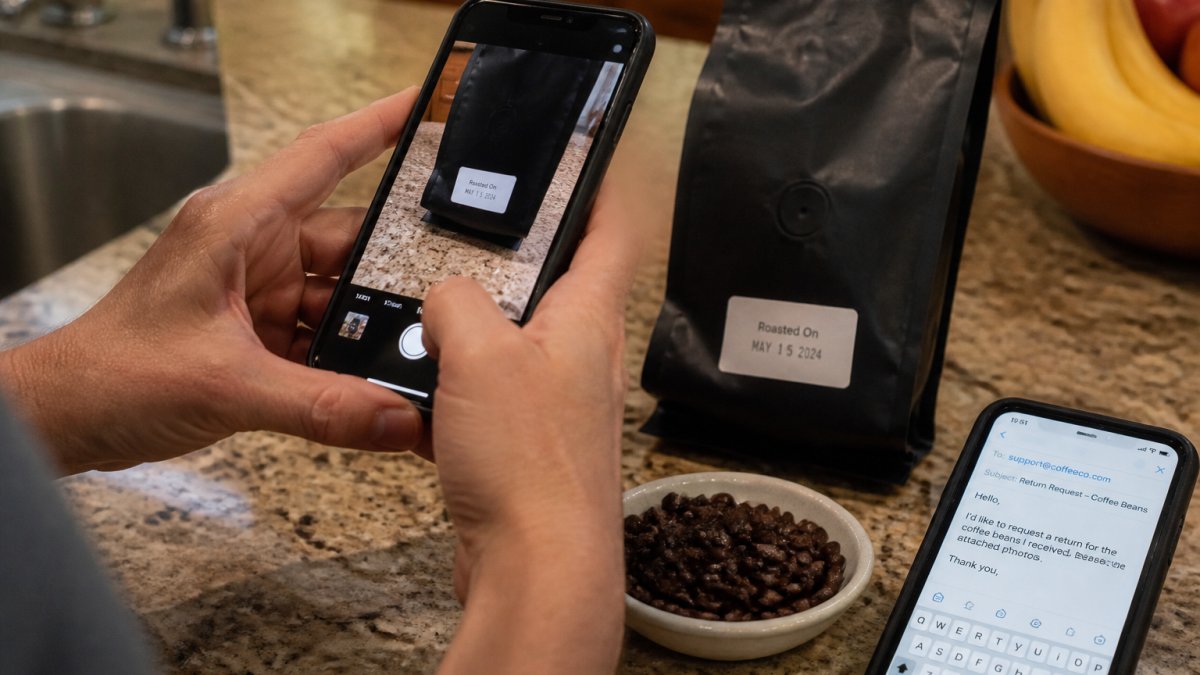
Documentation Checklist: What to Photograph and Keep
Good proof of purchase speeds up any inquiry. Keep these on hand:
- Order confirmation email or paper receipt
- Photo of the roast date stamp
- Photo of the batch number
A clear photo set turns a vague complaint into a claim a rep can approve in one pass.
Follow these steps in order, and do not ship anything back before you have a return authorization.
| Step | What to do |
|---|---|
| 1 | Find your order number and receipt of purchase |
| 2 | Read the store's return policy and note the return window |
| 3 | Photograph the roast date, batch number, and bag condition |
| 4 | Email customer care with your order number and a short description |
| 5 | Wait for a return authorization before shipping anything back |
| 6 | Follow their packing and shipping instructions exactly |
| 7 | Keep the tracking number until the refund or replacement arrives |
Coffee Bean Freshness and Roast Date: Setting Realistic Expectations
Roast date is the single best freshness signal on any bag. Coffee peaks days after roasting and slowly fades from there.
Store beans in an airtight container, away from light and heat, and buy amounts you will finish within a few weeks. For more from every bag, our guide on how to brew specialty coffee at home covers grind size, water, and timing.
The difference between "stale" and "not to my taste" comes down to smell and brew behavior. Flat, papery aromas and a fast, watery brew point to age. Sharp, sour, or bitter cups from fresh beans usually point to brewing.
Filing a Stale Coffee Beans Refund Claim
A stale coffee beans refund claim succeeds when you can show the beans arrived past their useful life, not just that they tasted mild.
When you contact the store, be specific: what the coffee smelled like, how you brewed it, and why you believe age is the cause.
Many roasters offer a freshness guarantee that covers this case; others will send a replacement from a newer roast.
How to Write a Coffee Complaint Email Template
A good complaint email is short, factual, and easy to act on. Use this template and fill in the blanks:
Subject: Order #[order number] - quality issue with [coffee name]
Hi [name],
I received order #[order number] on [date]. The bag of [coffee name], batch #[batch number], was roasted on [roast date].
I brewed it using [method] and noticed [specific issue: sour, flat, moldy smell, damaged seal]. I have attached photos of the bag, roast date, and beans.
Could you let me know whether this qualifies for a replacement or refund under your return policy? I am happy to follow your return instructions.
Thank you, [your name] | [order email] | [phone]
Keep the tone calm and specific. Reps approve clear claims faster than emotional ones.
Replacement vs. Refund, and What to Do With Rejected Coffee
Replacement is usually the faster path: a roaster can ship a new bag without waiting on a returned package. A refund takes longer but closes the loop if you want your money back.
The decision is really a math problem. Add up what the return will cost you, postage, time, the risk of a package lost in transit, and compare it to the value of the bag.
Who Pays Return Shipping
No federal rule forces a seller to cover return shipping on a change-of-mind return. The default depends on the store's policy and why you are returning:
- Defective or mis-shipped product: the seller should cover return shipping, and many will simply send a prepaid label or skip the return entirely. Ask for a prepaid label by name.
- Preference return (you don't like the taste): expect to pay return shipping yourself, and expect the store to deduct original shipping from the refund. Check the policy before you box anything.
- Late delivery under the FTC Mail Order Rule: the seller must offer a full refund, and you should not be out of pocket for return freight on an order that arrived late.
Carrier Damage Claims: When the Box, Not the Roaster, Is at Fault
If the bag arrived crushed, torn, or with a broken seal, the damage likely happened with the carrier. Under the major US carriers' standard practices, the recipient can often file a damage claim, but the shipper usually has to initiate it because the contract is between shipper and carrier. Your fastest path is to email the roaster with photos of the outer box and inner bag and ask them to file the claim.
International Orders: When the Return Costs More Than the Beans
For orders shipped outside the country, expect more friction. Cross-border return postage frequently exceeds the value of the coffee, and customs paperwork on a returned food item can cost more than the refund. Most stores handle this by offering a replacement or store credit instead of a physical return. Ask which option applies before you ship anything, and get the answer in writing.
What to Do With Rejected Coffee
What about the rejected coffee? Do not pour it down the drain if it is still safe to drink. Use it for cold brew, baking, or compost.
- Cold brew: stale beans extract fine in cold water; the method is forgiving of age.
- Baking: grind fine and use in brownies, rubs, or ice cream bases where the coffee is a background note.
- Compost: spent grounds are a legitimate compost input; check your municipal program's rules on food waste.
If the bag is moldy or the seal is compromised, bag it, tie it off, and put it in the trash, do not compost moldy food unless your program explicitly accepts it, and do not brew it.
Ordering Your Next Bag With Confidence
The best return is the one you never need. Ask about the return window before you buy, check the roast date on arrival, and store beans well.
At Reading Coffee, we roast in small batches. If a bag ever misses the mark, contact Reading Coffee customer care for help with the inquiry process.
Get started with Reading Coffee and find a bag you will actually want to finish.
Frequently Asked Questions
Can I return coffee beans if I just don't like the taste?
It depends on the roaster. Most coffee bean return policies cover objective problems like damage, mold, or a batch that clearly doesn't match its roast date. Subjective dissatisfaction, meaning the flavor simply isn't to your liking, is usually handled case by case. Check the store's policy for any freshness or money-back guarantee. Contact the customer care team with your order number and a specific description of what tasted off.
Can I return opened coffee beans?
Yes, in many cases. Because coffee is a perishable item, roasters know you have to open the bag to discover a defect. Unopened packaging returns are simpler, but opened bags are commonly accepted when the issue is damage, mold, or stale coffee beans. Keep the original bag, note the batch number and roast date, and photograph the beans before you discard anything. Some roasters ask you to return a portion of the product or dispose of it safely rather than ship it back.
How long do I have to report a problem with a coffee order?
Check the policy page for the exact return window and whether it counts from the ship date or delivery date. Report freshness or quality issues as soon as you brew the first cup, since waiting weakens your claim. Check the roaster's policy page for the exact window and whether it counts from the ship date or delivery date.
What should I include when reporting a problem with coffee beans?
Include your order number, proof of purchase, the roast date and batch number from the bag, and a short description of the defect. Photograph the packaging, the label, and the beans themselves. State clearly whether you want a replacement, a refund, or store credit. If the beans arrived damaged, keep the shipping box for photos. This documentation speeds up the return authorization process and makes it easier for quality control to trace the batch.
