
How to Select Beans for Cafes: A 2026 Guide
Table of Contents
- Start With Your Menu and Brewing Method
- Arabica vs Robusta: What Belongs in Your Cafe
- Understanding Roast Profiles and Flavor Notes
- How to Source Wholesale Coffee Beans for Cafes
- How to Choose a Coffee Roaster for Your Business
- Calculating Coffee Cost Per Cup Before You Commit
- Freshness, Roast Dates, and Storage
- Conclusion
- Frequently Asked Questions
Last Updated: September 28, 2026
Start With Your Menu and Brewing Method
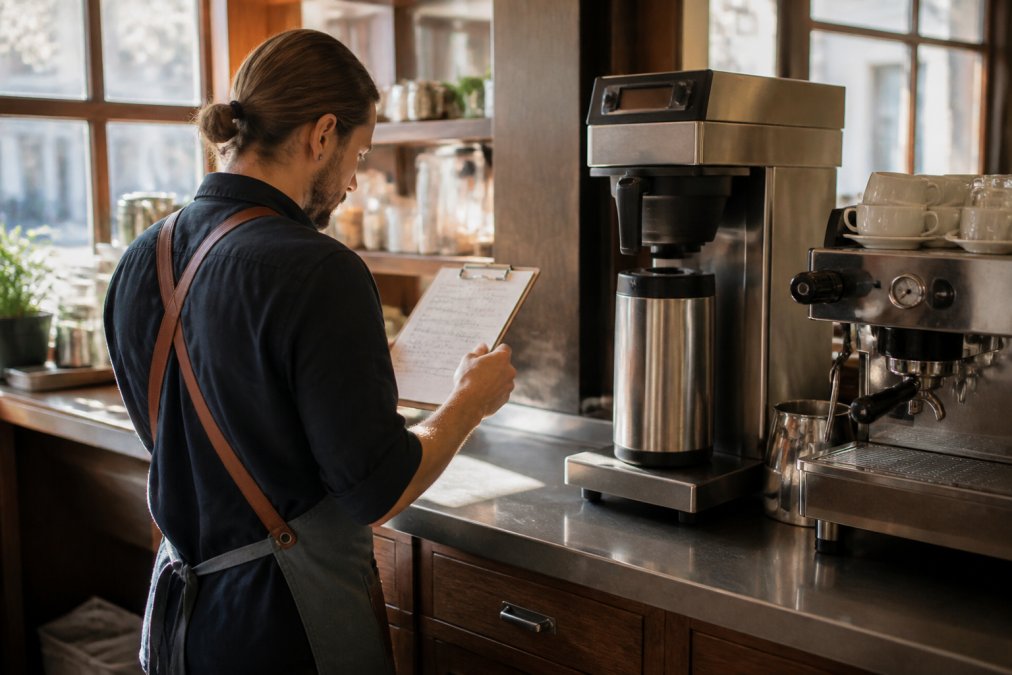
The most common mistake cafe owners make is trying to select beans before defining what they'll serve. Map out your drink menu and bar equipment first, a cafe built around milk-forward drinks has different bean requirements than one pushing black coffee or pour-over.
Match Grind Size and Roast to Your Equipment
Espresso machines push water through finely ground coffee under pressure, amplifying both sweetness and any defect, so darker roasts hold up better. Batch brewers work best with a medium grind and medium roast that extracts evenly over four to six minutes.
Arabica vs Robusta: What Belongs in Your Cafe
Arabica is the species behind nearly all specialty coffee, prized for sweetness, acidity, and layered flavor. Robusta carries roughly double the caffeine, a thicker body, and earthier, more bitter taste. Most cafes build on arabica and use robusta sparingly, usually in a traditional espresso blend for extra crema and punch.
Understanding Roast Profiles and Flavor Notes
A roast profile records how heat and time are applied to green coffee, and it determines the final cup more than origin alone. Two identical green beans roasted differently taste like entirely different coffees. Light roasts preserve origin character, medium roasts balance sweetness and acidity, and dark roasts replace origin notes with caramelization and smoke.

Light, Medium, and Dark Roast Differences
- Light roast: brighter acidity, more caffeine by weight, delicate fruit and floral notes, denser bean structure that resists extraction, best for pour-over and single origin
- Medium roast: balanced body and acidity, caramel and chocolate notes, the workhorse for batch brew and milk drinks
- Dark roast: low acidity, smoky and bittersweet, heavy body, more porous and soluble, forgiving on espresso but masks origin character
For a cafe menu that needs to please a broad crowd, a medium roast like a House Blend covers the most ground. It delivers bright acidity and full-bodied richness that works black or with milk.

Reading a Sensory Profile Before You Buy
A sensory profile describes what the coffee tastes like: acidity, body, aftertaste, and flavor notes. Match those descriptors to your menu, if you serve many oat milk lattes, brown sugar and chocolate notes hold up better than delicate floral ones.
Calibrating Your Grinder and Water to the Roast
This is the step most guides on how to select beans skip, and where cafes lose consistency: roast level changes how a bean behaves in the grinder, so a setting that works for a dark espresso blend will under-extract a light single origin.
- Denser light roasts need a finer grind and longer contact time. Expect to dial two to four clicks finer than your medium-roast baseline, and expect the setting to drift as the beans age through the week.
- Porous dark roasts extract fast. Grind coarser than you think you need, or you'll pull bitterness and ash. They also shed more fines, which can clog a flat-bottom batch basket over a long brew cycle.
- Water chemistry matters as much as the bean. Most specialty roasters target roughly 50 to 150 ppm total dissolved solids, with alkalinity low enough that it doesn't flatten acidity. If your tap water runs hard or heavily chlorinated, a carbon filter plus a test kit is cheaper than reformulating your menu around bad water.
Matching Roast to Drink, Not Just to Taste
Roast level also determines which drinks a bean can carry. A light, floral single origin makes a beautiful pour-over and a thin, sour latte. A dark, chocolatey blend makes a flat black cup and a rich, sweet latte. If your menu is 70% milk drinks, your default bean should be medium to medium-dark, with enough body and caramelized sweetness to survive dilution.
How to Source Wholesale Coffee Beans for Cafes
Sourcing wholesale coffee beans for cafes means building a direct relationship with a roaster who guarantees consistency, fair pricing at volume, and support when something goes wrong. Start with a conversation about your volume, menu, and non-negotiables, not a price sheet.
How to Choose a Coffee Roaster for Your Business
Choosing a coffee roaster comes down to four things: consistency, communication, flexibility, and values alignment. A roaster who nails all four becomes a partner; one who misses any becomes a monthly headache.
Verify Consistency With a Structured Sample Test
Consistency is the hardest quality to verify upfront, so don't rely on a single sample. Ask for the same bean across at least three roast dates, two to three weeks apart, and brew them side by side under identical conditions, same grinder setting, dose, and water, tasting blind if you can. A roaster whose third batch tastes like the first is one you can build a menu on; one whose third batch drifts is a supply-chain risk you can't afford.
Vet the Supply Chain, Not Just the Story
"Direct trade" and "ethically sourced" are marketing terms until you ask what's behind them. A roaster with real producer relationships can answer specific questions:
- Where does the green coffee come from, and who is the importer or exporter? A roaster who can name the importer and region has a traceable chain; one who can't is likely buying through a broker and repeating a label.
- How consistent is the green supply across seasons? Ask what happens when a harvest is short or a lot sells out, will they substitute, blend, or tell you in advance?
- What's the minimum order, and does it change by season? Small cafes get squeezed when minimums rise, so get the terms in writing.
- What happens if a batch doesn't perform in your equipment? A roaster who will replace or credit a bad batch is confident in their process. One who won't is passing the risk to you.
How to Read Sustainability and Ethical Certifications
If your customers care about how the coffee was produced, and increasingly they do, you need to know what the labels actually mean. The three you'll see most often are Fair Trade, USDA Organic, and Direct Trade, and they are not interchangeable.
- Fair Trade is a third-party certification with defined minimum prices and social premiums paid to cooperatives. It's auditable and standardized, but it sets a floor, not a ceiling, on producer welfare.
- USDA Organic certifies growing and processing practices, no prohibited synthetic inputs, documented chain of custody. It says nothing about price paid to the farmer.
- Direct Trade is not a single certifying body, it's a term roasters use for buying directly from producers, often at above-market prices. With no universal standard, verify it by asking for specifics: which producers, what price relative to the commodity market, how long the relationship has lasted.
Communication, Flexibility, and the Contract
Reading Coffee has built direct relationships with global producers since 1989 and roasts in small batches. Ask them the same questions you'd ask any supplier, the answers are the point.
Calculating Coffee Cost Per Cup Before You Commit
Calculating coffee cost per cup before you commit is the step most cafe owners skip, and it decides whether your margins work. The math is simple: divide the cost of a bag by the cups it yields, then account for waste, milk, and labor.
| Cost Factor | Typical Range Per Cup | Notes |
|---|---|---|
| Coffee beans | $0.45 to $0.65 | Depends on dose and yield |
| Milk or alt-milk | $0.25 to $0.50 | Higher for specialty alt-milks |
| Cup, lid, sleeve | $0.15 to $0.30 | Compostable costs more |
| Labor | $0.40 to $0.80 | Varies by wage and speed |
| Total cost | $1.25 to $2.25 | Before overhead and profit |
Freshness, Roast Dates, and Storage
Freshness is the most controllable variable in your coffee program, and roast dates track it. Coffee peaks roughly four to fourteen days after roasting, once it finishes degassing but before oxidation dulls the flavor. Beans older than four to six weeks taste flat no matter how good the origin.
Conclusion
Building a cafe menu that holds up means treating bean selection as an operational decision, not a taste test. Start with your equipment, match the roast profile to your brewing method, run the cost-per-cup math before signing anything, and hold your roaster to real freshness standards.
Frequently Asked Questions
How do I choose the right type of coffee beans for my cafe menu?
Start with your best-selling drinks. If espresso makes up most orders, choose a medium or dark roast blend with a full-bodied, consistent flavor. For pour-over or drip, a single-origin medium roast like Colombian Supremo highlights bright acidity and citrus notes. Offering one blend and one single-origin gives customers variety without overcomplicating your inventory. Match the roast profile to how the bean will be brewed, not just to personal taste.
What is the difference between single-origin and blend coffee for commercial use?
Single-origin coffee comes from one region and showcases a distinct flavor, like the lemon and brown sugar notes in a Colombian Supremo. Blends combine beans from multiple regions for balance and consistency, such as a House Blend with bright acidity and full-bodied richness. For cafes, blends offer reliable year-round flavor, while single-origins work well as rotating specials or featured pour-overs. Many cafes carry both to serve different customer preferences.
How do I balance coffee bean quality with profit margins?
Calculate your cost per cup first. A $19 bag of House Blend brewed at standard ratios yields roughly 40 to 50 cups, putting your bean cost near $0.40 per cup. From there, factor in milk, labor, and overhead. Premium beans can still be profitable if you price drinks correctly and minimize waste. Track how many cups each bag actually produces and adjust your wholesale order size to match real demand.
What should cafe owners look for in a wholesale coffee roaster?
Look for a roaster with consistent roast dates, transparent sourcing, and reliable delivery schedules. Ask about minimum order quantities, and how they handle seasonal supply gaps. A roaster with direct producer relationships can maintain flavor consistency across harvests. Request samples and evaluate the sensory profile before committing to a contract. Communication and responsiveness matter as much as bean quality.