
Small Office Coffee Subscription Benefits and Costs
Last Updated: November 24, 2026
Quick Summary
A small office coffee subscription delivers fresh, whole-bean coffee on a fixed schedule, so the breakroom never runs out and no one has to make a grocery run. The main benefits are freshness, convenience, predictable costs and a better daily experience at work. Teams should size the order from their actual cups per month.
- Coffee loses aromatic compounds soon after roasting, so subscriptions shipped near the roast date often taste better.
- Calculate monthly need from headcount, daily drinkers and cups per person, then convert cups to pounds.
- A team of eight with six daily drinkers needs about 7.9 pounds per month, or roughly 10.5 twelve-ounce bags.
- Ordering to the busiest week instead of the typical week is the most common sizing error.
- Breakfast Blend costs $18.00 per bag, about $0.75 per cup, and Peru Cajamarca costs $20.00 per bag.
Table of Contents
- What Are the Benefits of a Small Office Coffee Subscription?
- How Much Coffee Does a Small Office Actually Need?
- What Does a Monthly Coffee Subscription Cost?
- Choosing an Office Coffee Subscription Plan
- Best Beans for Office Breakrooms
- Brewing Equipment, Setup, and Maintenance
- Starting Your Office Coffee Subscription
- Frequently Asked Questions
What Are the Benefits of a Small Office Coffee Subscription?
A small office coffee subscription delivers fresh, whole-bean coffee on a fixed schedule, so the breakroom never runs out and no one has to make a grocery run. For most small teams, the main benefits are freshness, convenience, predictable costs and a better daily experience at work. Reading Coffee has been roasting small batches since 1989.
Freshness matters more than most offices expect. Coffee starts losing aromatic compounds soon after roasting, so a subscription that ships close to the roast date usually tastes better than a bulk bag bought at a warehouse store. A roast date printed on each bag also makes it easy to check how fresh the coffee is.
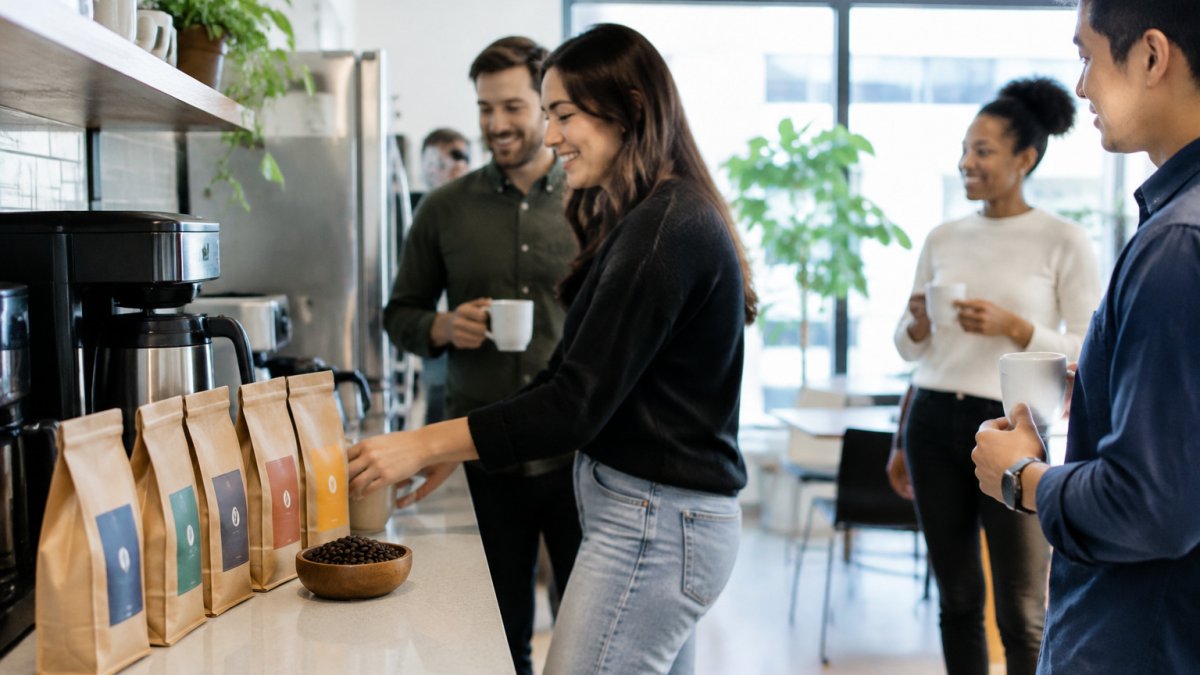
Convenience is the second benefit. Someone on the team no longer has to track stock, place orders or carry bags in from the car. The coffee simply arrives. Many offices also find that a good breakroom coffee supports morale, since a shared cup is an easy, low-cost way to make the workplace feel welcoming.
Predictable costs are the third benefit. A subscription turns an irregular set of purchases into one fixed line item, which makes the coffee budget easier to plan. Teams that want to compare options should look at the price per cup, not just the price per bag. For guidance on picking beans that match your volume and taste needs, see how to select beans suited to a business's volume and taste needs.
Watch out: A subscription that is too large for your team leads to stale coffee sitting in the breakroom. Start with a smaller delivery and adjust after a month of real use.
How Much Coffee Does a Small Office Actually Need?
A small office usually needs between one and three pounds of coffee per week, but that range is too wide to order from. The reliable way to size a subscription is to calculate cups per month from headcount, then convert cups to bags using the yield of your brew method. This is the step most offices skip, and it is the reason subscriptions end up either running out midweek or leaving stale bags in the cabinet.
Start with the yield. A standard 12-ounce mug of drip coffee uses about 0.5 ounce of ground coffee, so one pound (16 ounces) yields roughly 32 cups. A stronger 16-ounce serving uses about 0.75 ounce and yields about 21 cups per pound. Espresso changes the math entirely: a double shot uses about 0.6 ounce of coffee, so a pound yields roughly 26 double shots before accounting for dialing in and waste. Use the number that matches how your team actually brews.
Here is the calculator in practice for a team of eight:
- Coffee drinkers: 8 people, of whom 6 drink coffee daily.
- Cups per person per day: 2 on average.
- Daily cups: 6 × 2 = 12 cups.
- Monthly cups: 12 cups × 21 workdays = 252 cups.
- Pounds needed: 252 ÷ 32 cups per pound ≈ 7.9 pounds per month.
- Bags needed: at a 12-ounce bag, 7.9 pounds ÷ 0.75 pound per bag ≈ 10.5 bags per month.
That is the number to order against, not a guess. A team of four with three daily drinkers at two cups each needs about 126 cups per month, or roughly 4 pounds, or about 5.3 twelve-ounce bags. A team of twelve with nine daily drinkers at two cups each needs about 378 cups, or roughly 11.8 pounds, or about 15.7 bags.
Adjust for the variables that move the number most. If your team runs a single-serve pod machine alongside drip, count only the drip drinkers in the pound calculation. If meetings pull in outside coffee, add one bag per week during heavy meeting cycles. If half the team is remote on Fridays, reduce the workday count to 20 instead of 21. A common pattern is that the first month's order is 20 to 30 percent too high because offices count the busiest week rather than the typical one.
Watch out: Ordering to the busiest week rather than the typical week is the most common sizing error, and it defeats the freshness benefit that justifies a subscription in the first place. Order slightly under your calculated need for the first month, track how many days the stock actually lasts, and adjust the delivery cadence from real usage rather than from the headcount estimate alone.
What Does a Monthly Coffee Subscription Cost?
Reading Coffee's single-origin bags, such as the Peru Cajamarca and Tanzania Peaberry, are priced at $20.00 each, and the Breakfast Blend is $18.00 per bag. Your monthly cost depends on how many bags your team goes through, so the cleanest way to budget is to multiply the bags you expect to use by the price per bag, then divide by the cups those bags yield to get a cost per cup you can compare against every alternative.
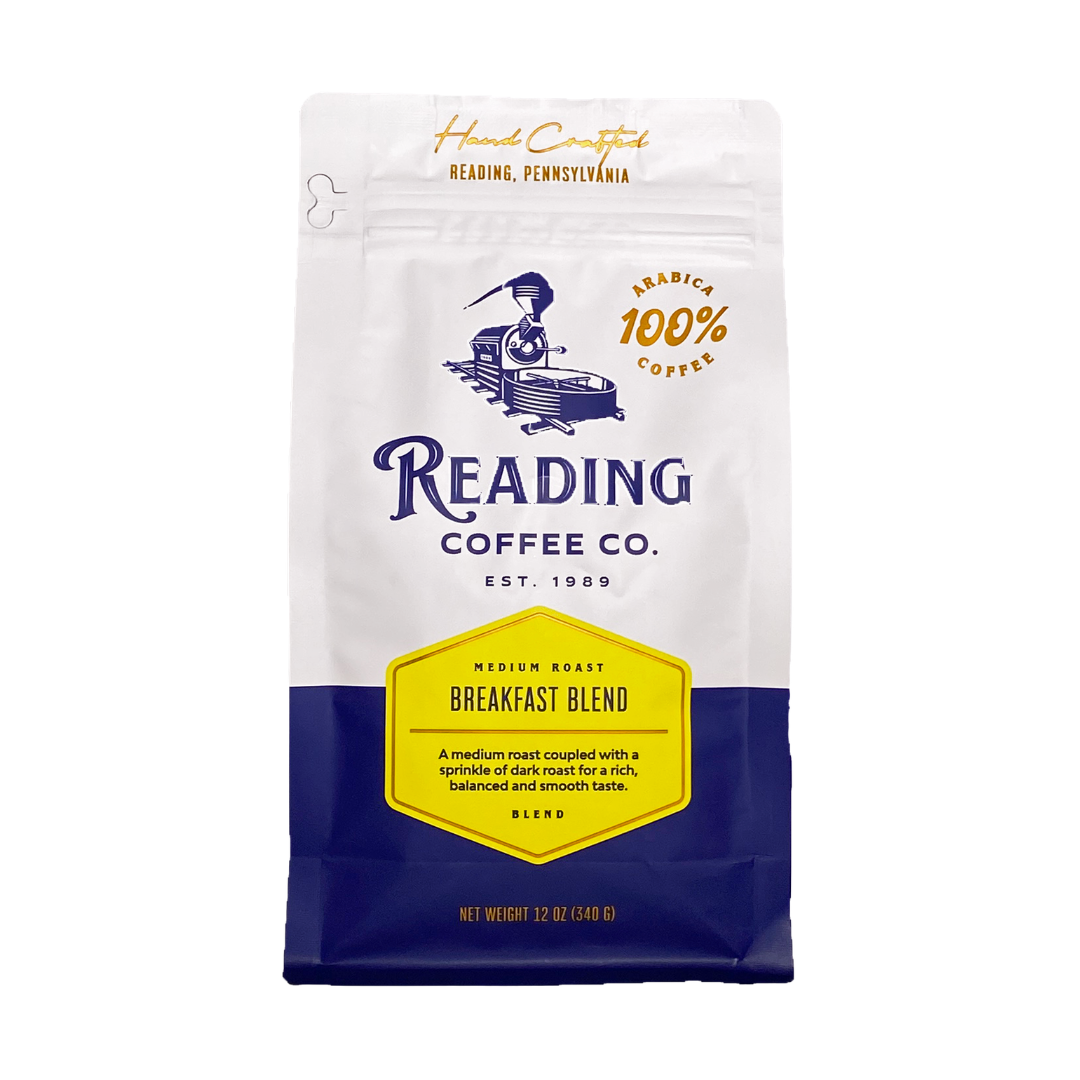
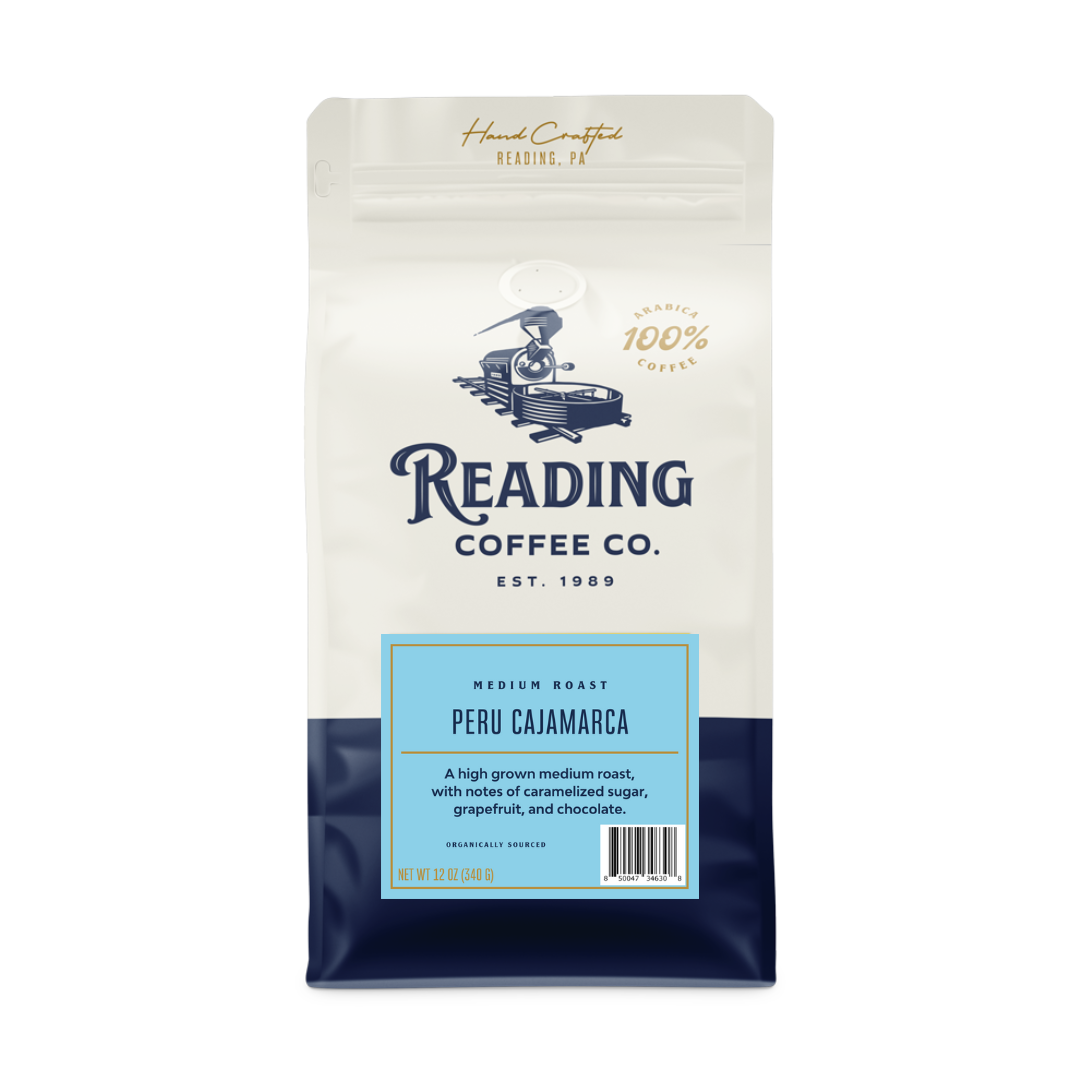
Run the math on a 12-ounce bag. At 0.5 ounce per 12-ounce mug, a 12-ounce bag yields about 24 cups. At $18.00 for Breakfast Blend, that is about $0.75 per cup. At $20.00 for a single-origin, it is about $0.83 per cup.
Watch out: Comparing price per bag across vendors hides the real difference, because bag sizes vary from 12 ounces to 2 pounds and yield per pound changes with brew strength. Before choosing a plan, it helps to understand the options and tradeoffs of buying specialty beans online. Convert every option to cost per cup at your actual serving size before deciding, and include equipment, filters, and delivery fees in the total.
Choosing an Office Coffee Subscription Plan
The right plan depends on how many people drink coffee, how often you want deliveries and how much variety your team wants. A small team with simple tastes usually does well with one reliable blend on a regular schedule. A team that enjoys trying new coffees may prefer a mix of a house blend and one rotating single-origin.
When comparing plans, check these points:
- Delivery frequency: Can you change the schedule or skip a month without penalty?
- Bag size: Does the plan match your weekly usage, so nothing sits too long?
- Roast date: Is the roast date printed on each bag?
- Flexibility: Can you switch blends or pause the subscription easily?
We recommend starting with the flexible option, since a team's coffee preferences often change once people start tasting different beans.
Best Beans for Office Breakrooms
For many breakrooms, a medium-roast blend is a versatile choice. Our office-focused buyer's guide to breakroom beans covers more options for shared kitchens. Reading Coffee's Breakfast Blend is a medium roast with a touch of dark roast, which gives it a smooth, balanced flavor that works for people who drink coffee black or with milk.
Single-origin coffees are a good option for teams that want variety. The Peru Cajamarca is a medium roast with notes of caramelized sugar, grapefruit, chocolate and grape jelly. The Tanzania Peaberry is also medium roast, with notes of cocoa, tropical fruit and lemongrass. Peaberry coffees come from a single seed per cherry instead of the usual two flat beans, which the producer notes may give the beans more intense flavor.
Here is a quick guide to choosing:
| Bean | Roast | Flavor Notes | Best For |
|---|---|---|---|
| Breakfast Blend | Medium with dark accent | Smooth, balanced | Everyday breakroom coffee |
| Peru Cajamarca | Medium | Caramel, grapefruit, chocolate | Teams wanting a fruity, sweet cup |
| Tanzania Peaberry | Medium | Cocoa, tropical fruit, lemongrass | Teams wanting a bright, complex cup |
Our practical advice is to keep one everyday blend stocked and rotate a single-origin for variety. Teams that brew all day can also browse beans suited to heavy daily use. Decaf versions of the Breakfast Blend are also available, which helps if some staff avoid caffeine.
Brewing Equipment, Setup, and Maintenance
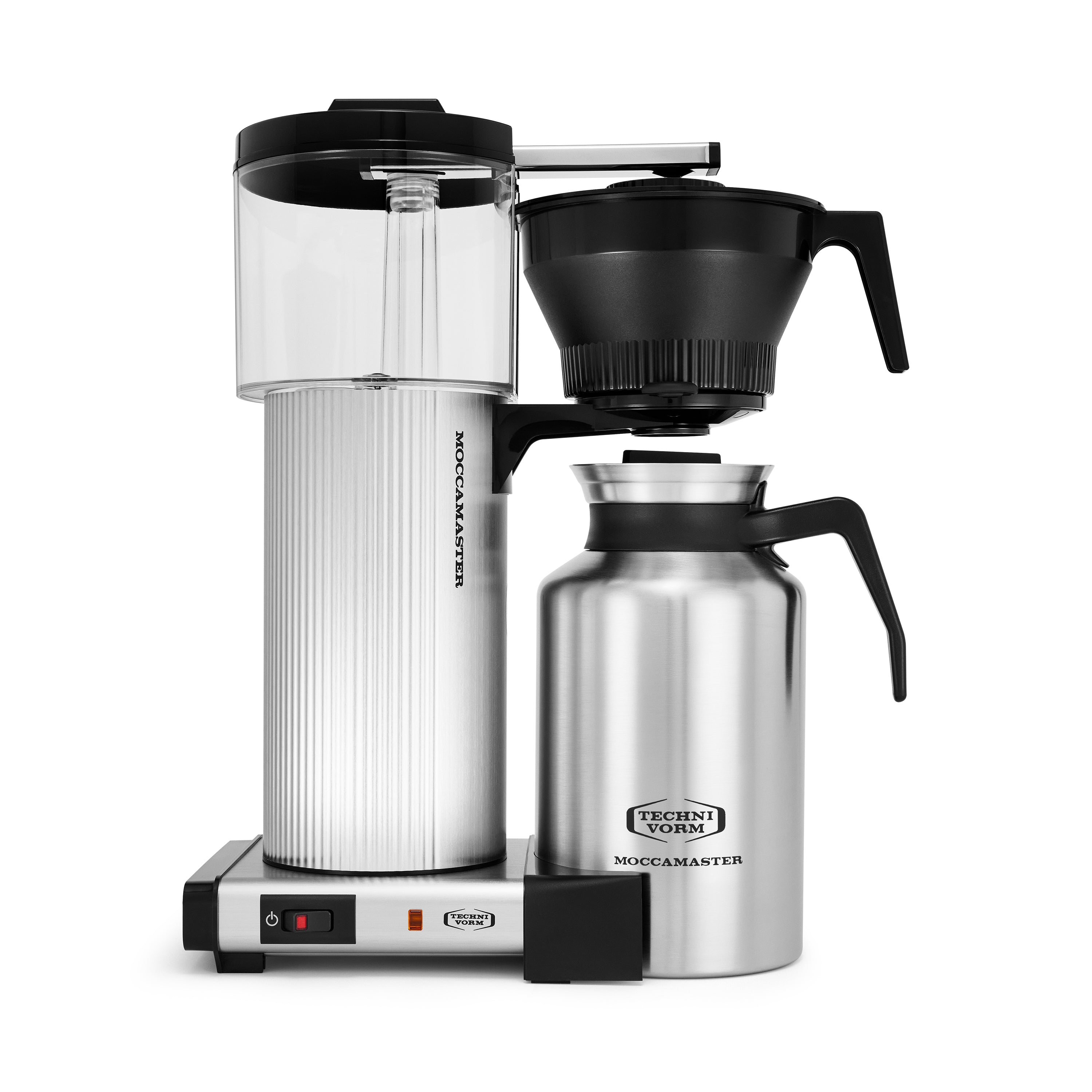
The right brewer makes a real difference in breakroom coffee. For a small office that brews a full pot at a time, the Moccamaster CDT Grand ($405.00) is a strong choice. It has a 60-ounce capacity, so it suits a small team or a shared kitchen, and its double-walled stainless steel thermal carafe keeps coffee hot for up to an hour. The brewer makes a full carafe in six to seven minutes and heats water to 196°F to 205°F.
Setup is simple. Place the brewer on a stable counter near a water source, keep whole beans in an airtight container, and grind only what you need for each brew. Grind size matters: a coarser grind suits drip brewers, while a finer grind suits espresso-style machines.
Starting Your Office Coffee Subscription
Starting a subscription works best as a short trial. Begin with one everyday blend, a delivery schedule that matches your weekly count and a simple rule for who orders more when stock runs low. After a month, review how quickly the bags run out and whether anyone wants a different bean.
Once the team settles on a rhythm, add one single-origin to rotate in. Tracking the cost per cup each month shows whether the subscription is delivering the value you expected. For teams ready to begin, Reading Coffee offers blends and single-origin beans that suit breakrooms, and the Breakfast Blend is a practical starting point for most offices.
Frequently Asked Questions
Is a coffee subscription worth it for a small office?
For most small offices, yes, if the team drinks coffee every day. A subscription replaces ad hoc grocery runs and café runs with predictable deliveries, so the office pays a known amount each month instead of buying small quantities at retail prices. Reading Coffee's Breakfast Blend is listed at $18.00 and the single-origin bags at $20.00, so the value depends on how many bags your team goes through. Estimate your monthly cups first, then compare that total against what you currently spend on coffee and supplies.
How much coffee does a small office need each month?
A useful starting estimate is to count cups per day across the team, multiply by working days in the month, and divide by the number of cups a bag yields. An 8-person office where each person drinks two cups a day uses about 16 cups per workday. Over roughly 21 working days, that is about 336 cups a month. Start with one bag per week, track how quickly it runs out for two weeks, and adjust the delivery cadence from there.
Can a small office choose different coffees with a subscription?
Yes. A practical setup is one medium-roast blend for daily brewing, such as the Breakfast Blend, and one or two single-origins, such as the Peru Cajamarca or Tanzania Peaberry, for staff who want something different.
